AI Orchestration Platform
One AI model is a proof of concept.
An orchestrated AI system is a business capability.
Most organizations have run successful AI pilots. The challenge isn’t proving that AI works in a controlled environment, it’s making AI work reliably across real business processes, with real data, at real scale. AI orchestration connects models, agents, data sources, and enterprise systems into coordinated workflows that operate predictably, recover from failure gracefully, and produce outputs that the business can actually act on.
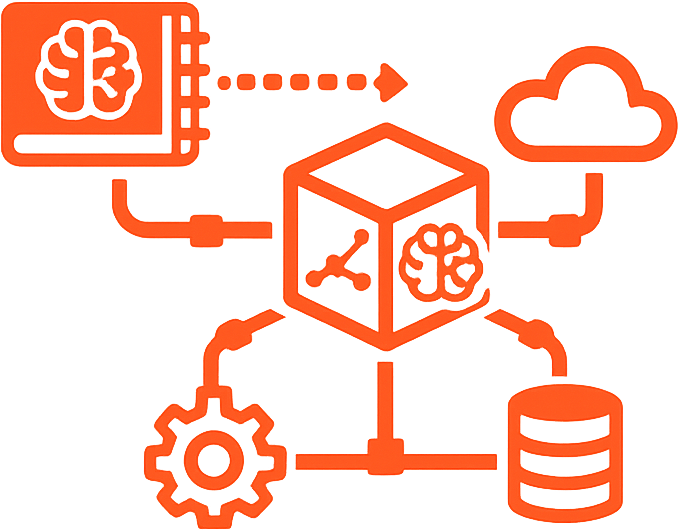
Pilots Don’t Scale. Platforms Do.
A single model producing promising results in a notebook is not an AI capability. An orchestrated platform that routes tasks, manages context, handles failures, and integrates with your existing systems is.
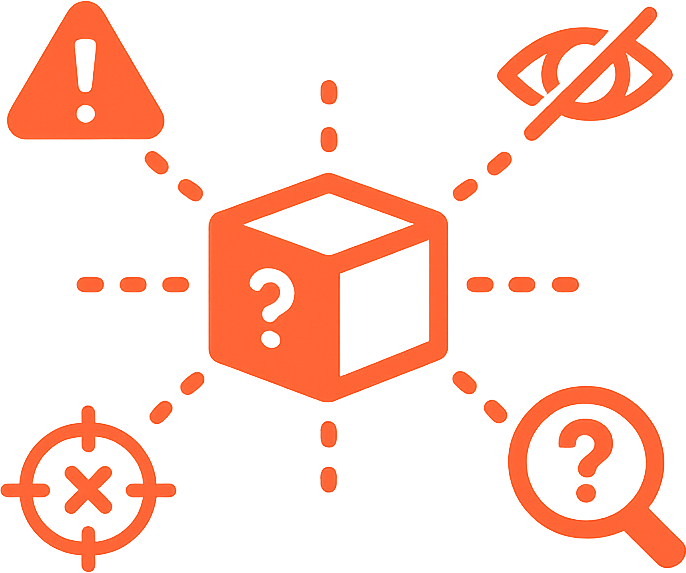
AI Without Orchestration Is a Black Box
When models operate in isolation, no one can see what triggered a decision, trace where an output came from, or intervene when something goes wrong. Orchestration makes AI observable, auditable, and correctable.
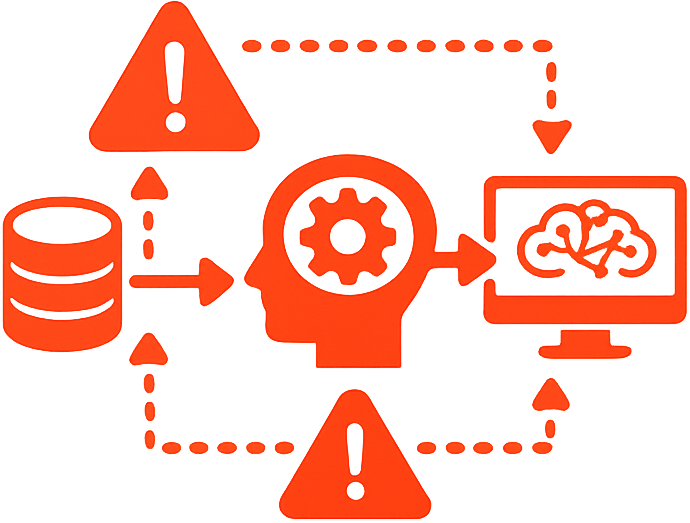
The Models Are Only Part of the Problem
Getting AI to work in production requires solving the surrounding infrastructure: how data flows in, how outputs flow out, how failures are caught and handled, and how humans stay appropriately in the loop at every critical decision point.
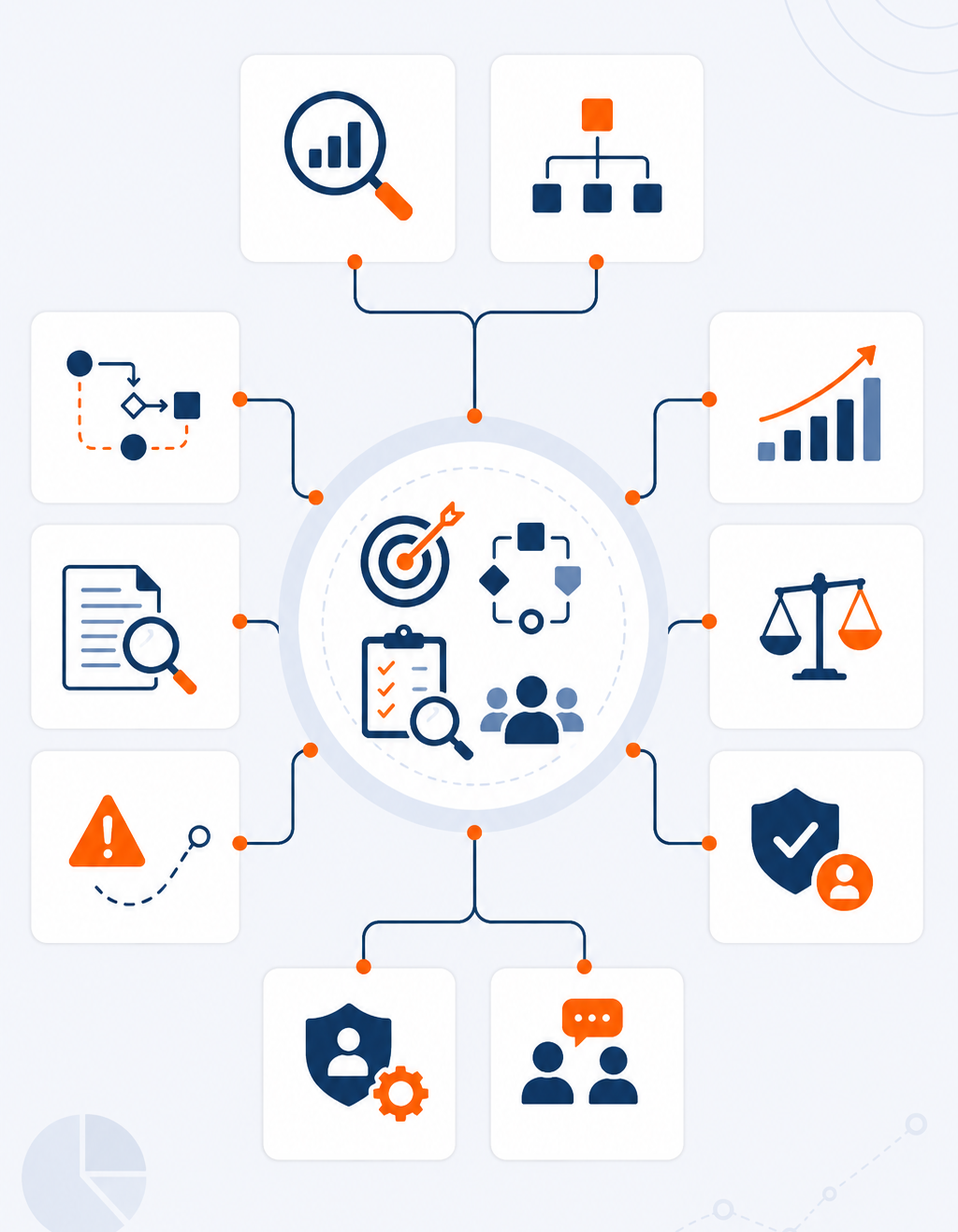
Our Strategic Roadmap to Implementation
Reaching the right customer at the right time requires a disciplined, multi-channel approach. Our four-phase framework combines AI targeting, direct mail, digital amplification, and analytics into one seamless campaign engine.
Use Case Scoping
Identify the AI workflows that will create real business value, and the ones that won't.
Not every process that could be automated with AI should be. The most expensive AI projects are the ones that automate the wrong things at great cost, or automate the right things without understanding the failure modes. We begin every orchestration engagement by mapping the business processes where AI can create measurable impact — examining the inputs, the decisions being made, the outputs required, and critically, the consequences when the AI gets it wrong. This scoping defines both the architecture and the human oversight model before any development begins.
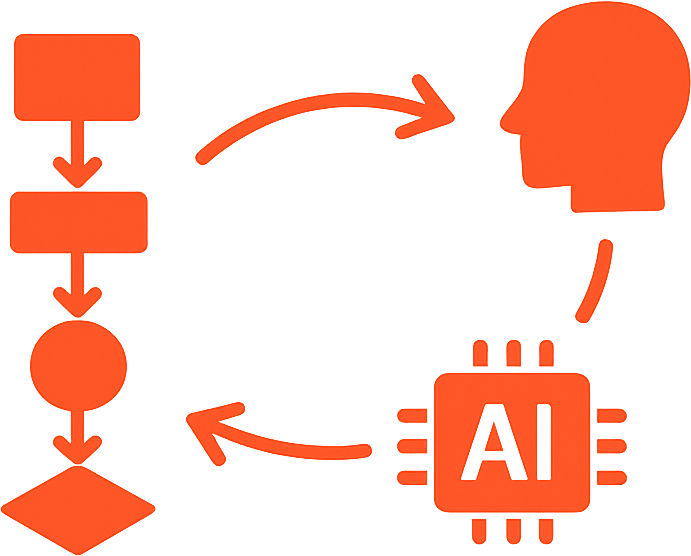
Process Mapping
Identify which workflows suit AI automation versus rules-based logic or human judgment.

Failure Definition
Architect the system to catch and contain errors before they reach production.

Oversight Requirements
Define where human review, approval, or override is required before any model is selected.
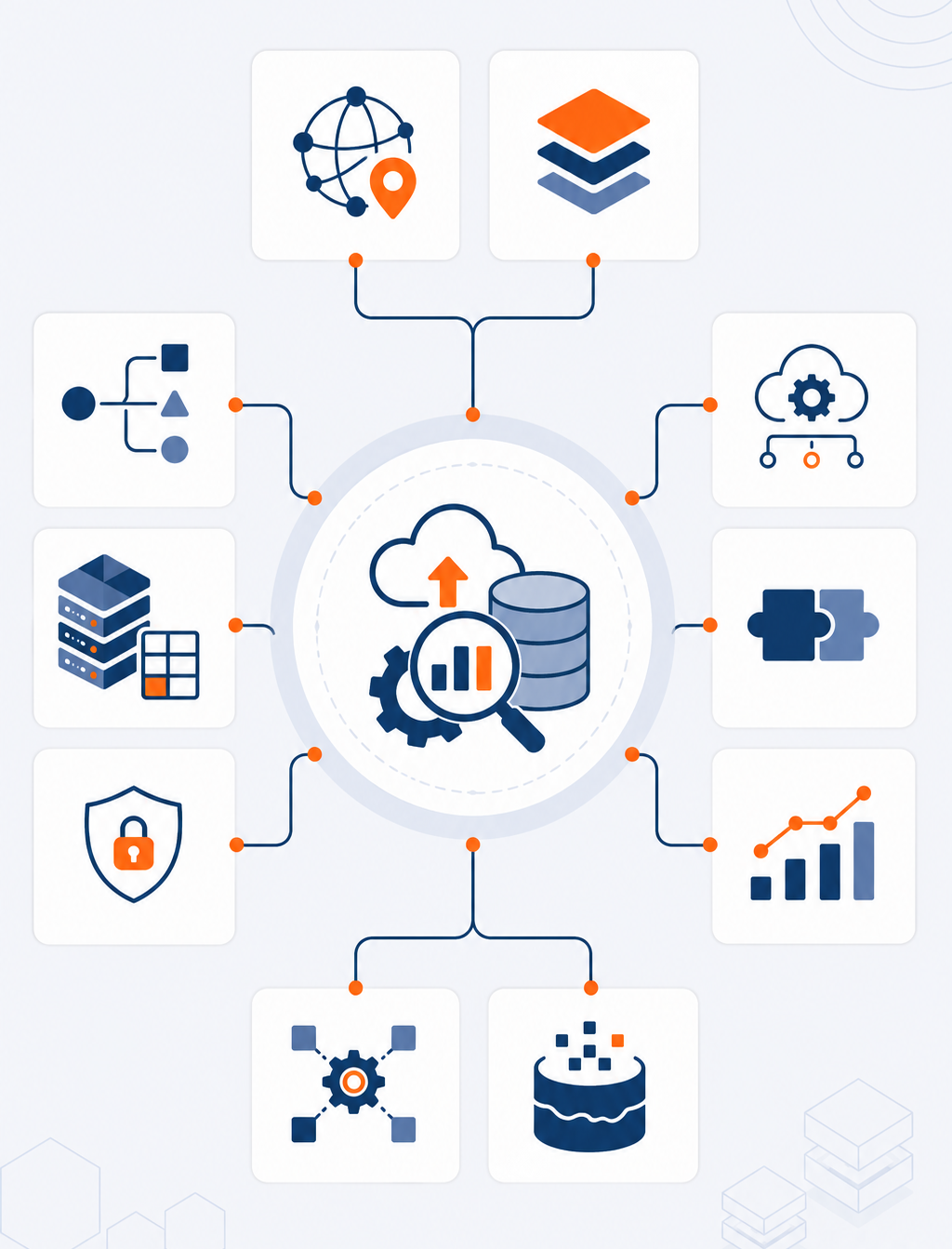
Architecture Design
Design an orchestration layer that connects AI to the systems your business already runs on.
AI orchestration architecture answers a deceptively complex set of questions: How do tasks get routed to the right model or agent? How is context passed and preserved across multi-step workflows? How are different AI components — retrieval systems, language models, specialized classifiers, external APIs — coordinated into a coherent process? How does the orchestration layer connect to your CRM, ERP, data warehouse, and document systems without introducing new fragility? We design architectures that are modular enough to evolve as AI capabilities change and robust enough to run reliably in production.
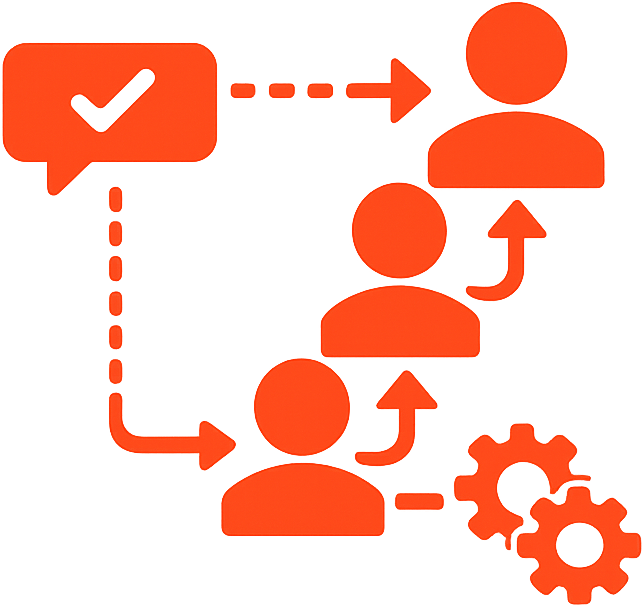
Task Routing
Simple requests go to lightweight models; complex tasks escalate to more capable agents.
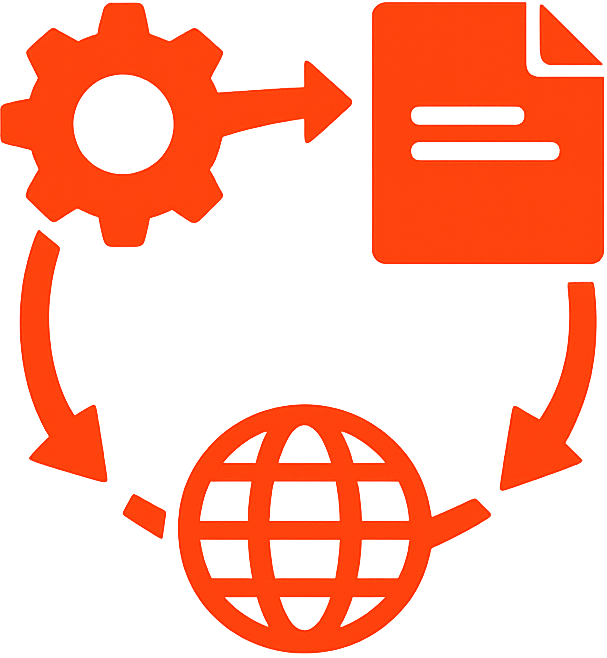
Context Management
State and context are passed precisely across workflow steps so nothing is lost or duplicated.
System Integration
CRM, ERP, and API connections are built with retry logic so upstream failures don't cascade.
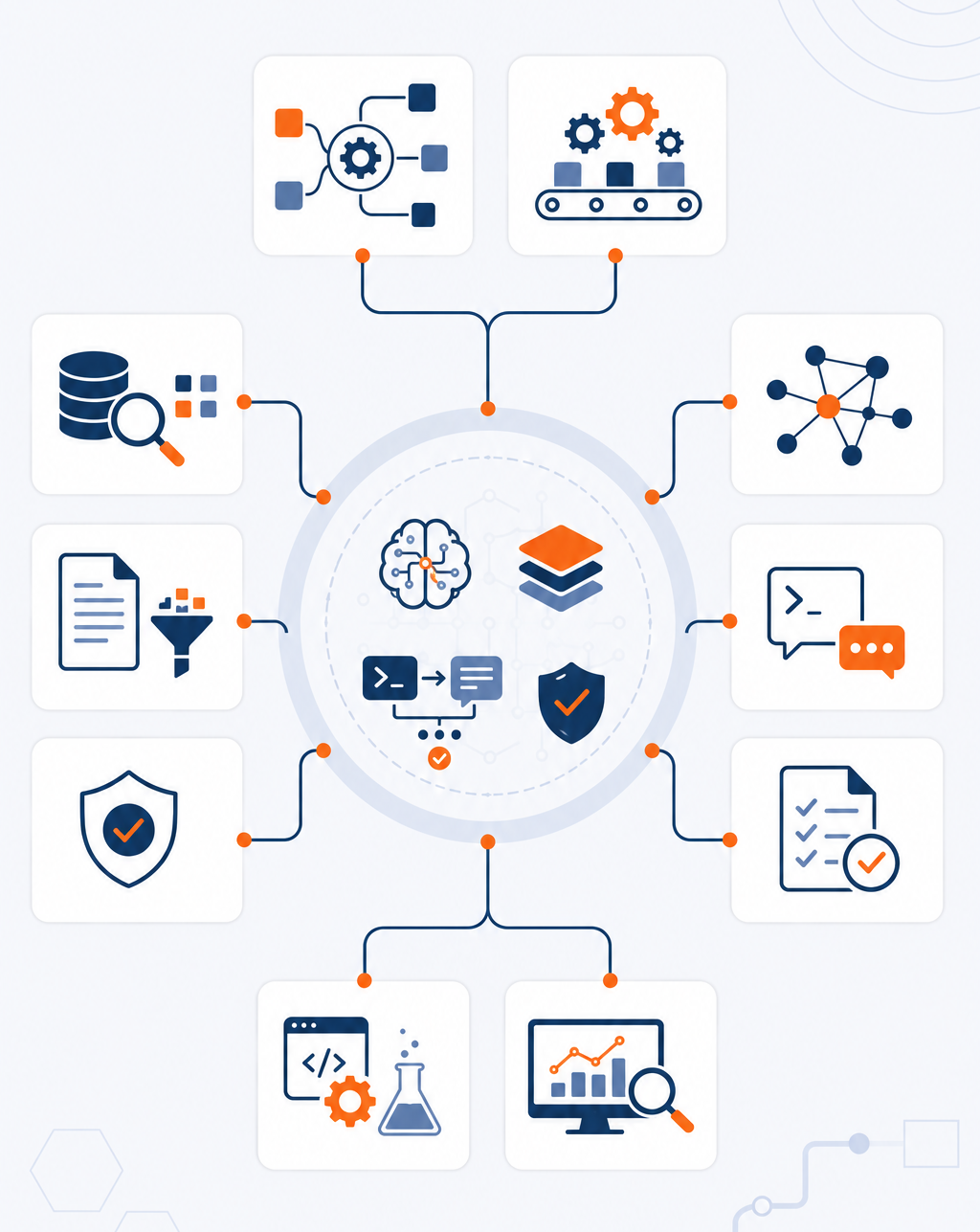
Pipeline Development
Build AI pipelines where every component earns its place and nothing is trusted blindly.
An orchestration platform is only as reliable as its weakest component. We evaluate and select models — whether proprietary APIs, open-source models, or fine-tuned variants — based on your specific task requirements, latency constraints, cost envelope, and data privacy obligations. We build the retrieval pipelines, prompt engineering systems, output parsers, and validation layers that turn raw model capability into reliable, production-grade results. Every component is tested against realistic inputs, including adversarial and edge-case ones, before it touches production data or drives a business decision.

Model Selection
Models are chosen based on performance against your actual inputs, not general benchmarks.

Output Validation
Every output is parsed and schema-checked before it triggers any downstream action.
Stress Testing
Every component is tested against malformed and edge-case inputs before touching production data.
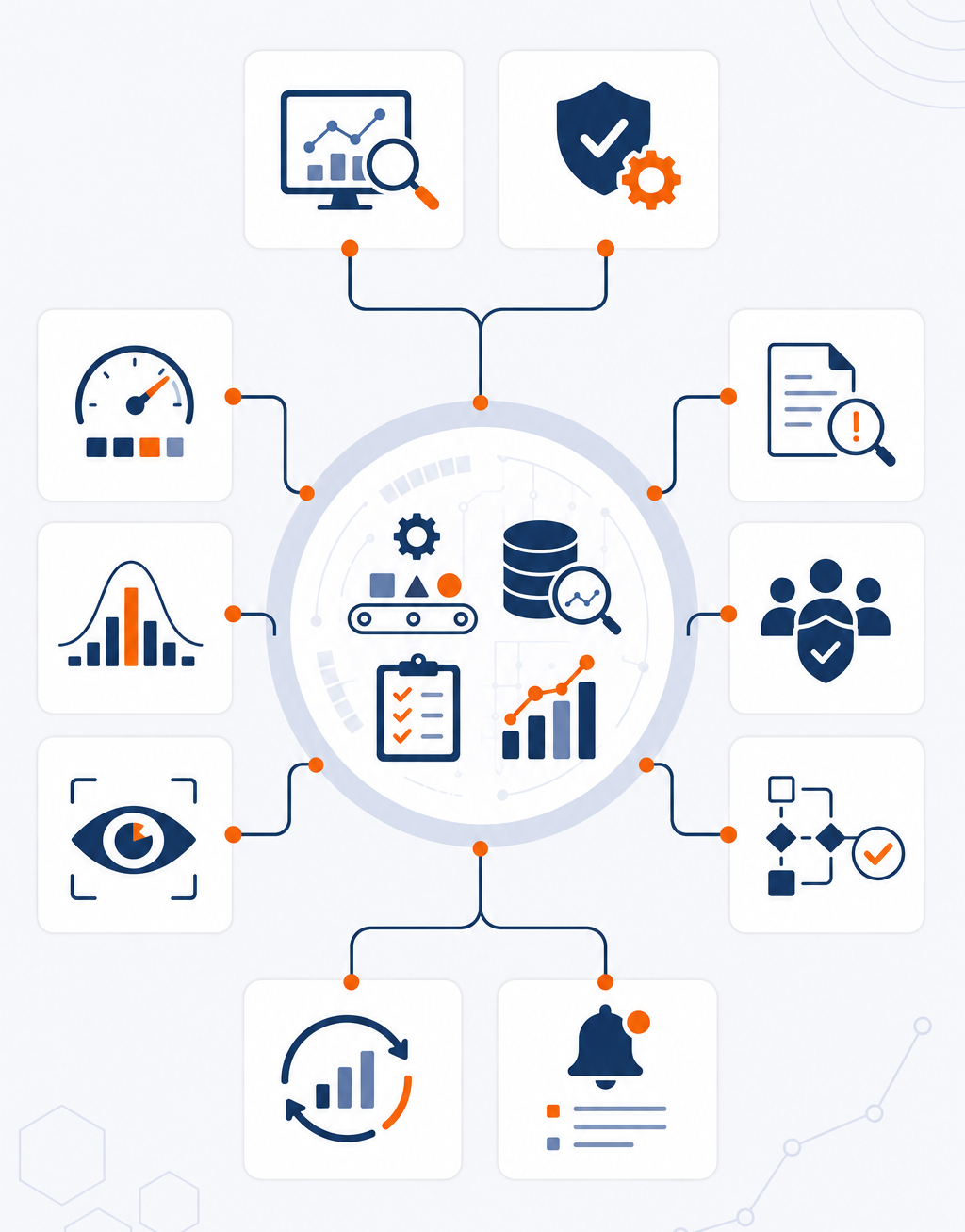
Monitoring & Governance
An AI system you can't observe is one you can't trust.
Production AI systems drift. Models that performed well at launch gradually degrade as the world they were trained on diverges from the world they're operating in. Inputs that were never anticipated start arriving. Edge cases accumulate silently. Without continuous monitoring, these signals are invisible until they've already caused harm. We implement observability infrastructure that tracks model performance, input distribution, output quality, and system latency — and we establish the governance processes that determine when retraining, prompt revision, or human escalation is required.

Continuous Monitoring
Accuracy, latency, and output patterns are tracked so degradation is caught early.
Decision Logging
Every AI output is recorded with its input and reasoning trace for full auditability.
Escalation Thresholds
Human review and retraining triggers are defined before launch, not after failure.
Case Studies
Trusted by leading brands across the globe. Know how Contata helped companies drive more value to their businesses with top-notch Data Science, App Development, and Marketing solutions.



.png)



Featured Insights


Trusted Partners in Achieving Excellence
For over 25 years, Contata has been the behind-the-scenes partner that ambitious businesses rely on, embedded at every level, from strategy to delivery, to make every project succeed. And we do it cost-effectively.